 how-to
Refrigerator Repairman: Costs, Fixes & When to Replace
Table of Contents
- What a Refrigerator Repairman Actually Does
- Refrigerator Troubleshooting: What to Check Before You Call
- Why Your Refrigerator Is Not Cooling (and What Fixes It)
- Refrigerator Repair Cost: What Drives the Bill
- Refrigerator Repair or Replace: How to Decide
- Residential and Commercial Service, Response Times, and Guarantees
- How to Choose a Refrigerator Repairman You Can Trust
- Frequently Asked Questions
Last Updated: October 21, 2026
What a Refrigerator Repairman Actually Does
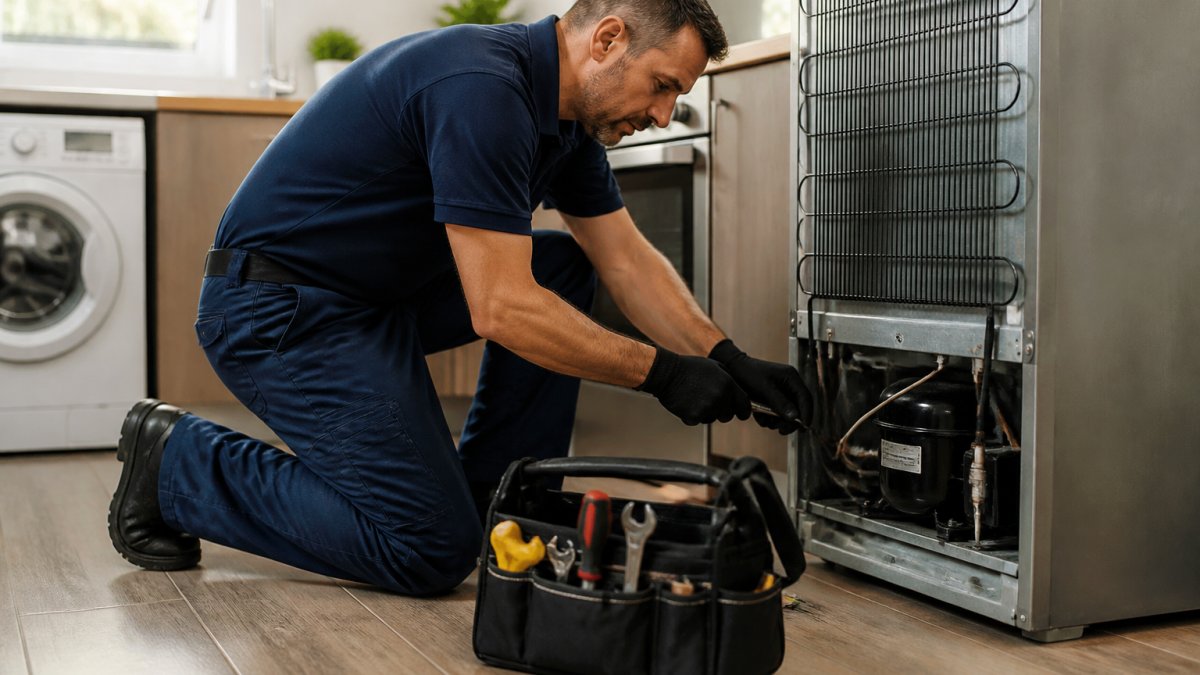
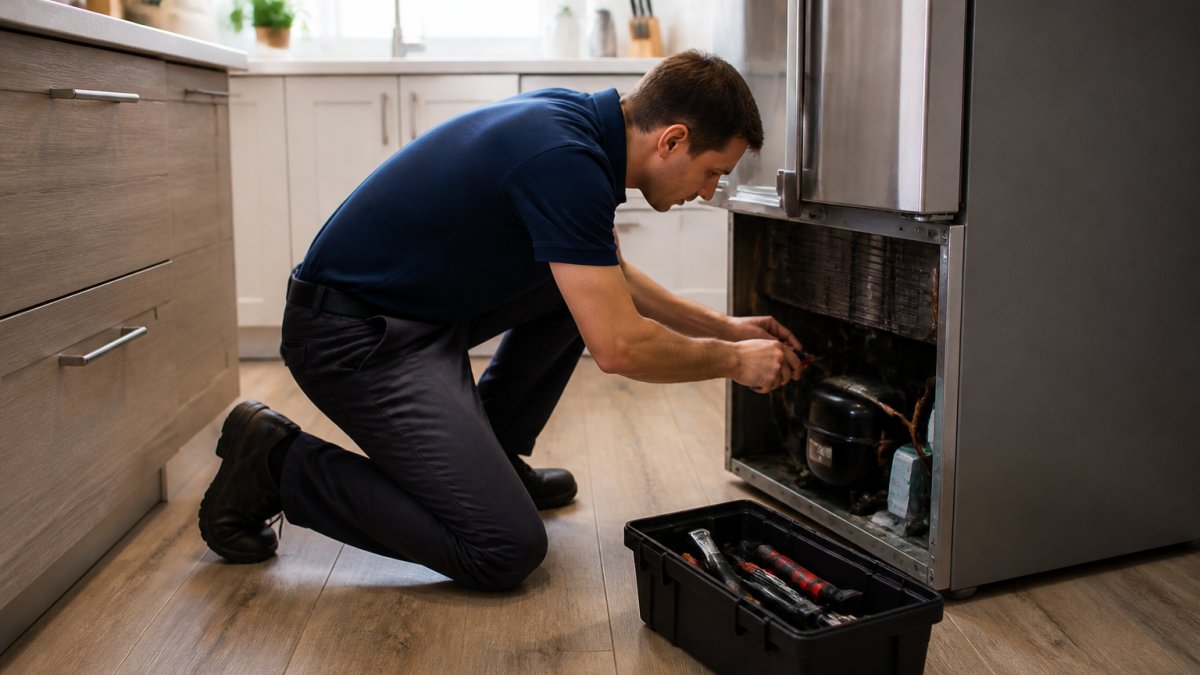
A refrigerator repairman is a trained appliance technician who diagnoses and fixes cooling, electrical, and mechanical faults in household and commercial refrigerators. A refrigerator repairman handles everything from sealed-system work to simple door seal swaps, and the job is broader than most homeowners expect.
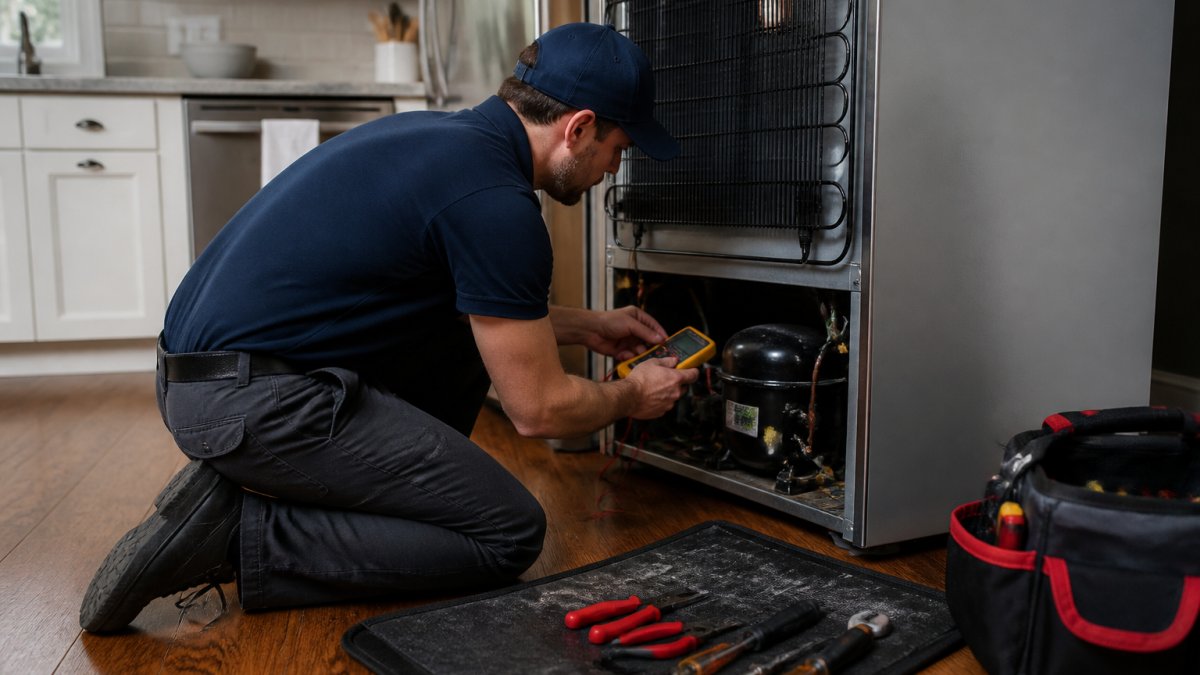
The work breaks into four buckets:
- Diagnosis: testing the compressor, thermostat, thermistors, and control board to find the actual fault
- Cooling problems: refrigerant leaks, blocked condenser coils, failed evaporator fans
- Airflow and seals: door gaskets, defrost systems, frost buildup
- Electronics: control boards, temperature sensors, ice maker modules
A good refrigerator repair technician tests before replacing parts. That distinction matters, because the most common mistake is a homeowner paying for a new thermostat when the real problem was a $12 evaporator fan motor. Diagnosis is the whole job; parts are just the ending.
Refrigerator Troubleshooting: What to Check Before You Call
Before you book a service call, run these checks. Many refrigerator troubleshooting steps take ten minutes and can save you the cost of a diagnostic visit entirely.
Start with power and settings. Confirm the outlet works, the breaker hasn't tripped, and the temperature dial hasn't been bumped. Next, pull the refrigerator away from the wall and look at the condenser coils. A thick mat of dust and pet hair forces the compressor to run constantly and can push temperatures up. Vacuum them and wait a few hours.
Then check the door gaskets. Close the door on a dollar bill; if it slides out easily, the seal is failing and cold air is escaping. Finally, listen. A fan running but no cooling points one direction; total silence points another.
Diagnosis by Symptom: Not Cooling, Leaks, Noise, and Frost
Symptom patterns narrow the fault fast. Here's how we read them:
| Symptom | Likely Cause | DIY or Call |
|---|---|---|
| Refrigerator not cooling, freezer fine | Evaporator fan or defrost system | Call |
| Both compartments warm | Compressor, sealed system, or control board | Call |
| Water leak on the floor | Clogged defrost drain or cracked drain pan | Check drain first |
| Unusual noise (buzzing, rattling) | Fan blade obstruction or failing compressor | Call |
| Frost buildup in freezer | Defrost heater or timer failure | Call |
| Ice maker stopped | Water supply line or inlet valve | Check valve first |
A refrigerator not cooling in both compartments is the one symptom that should not be troubleshooted at home. That pattern usually means refrigerant loss or a compressor fault, and both require sealed-system tools and certification.
Why Your Refrigerator Is Not Cooling (and What Fixes It)
A refrigerator that won't cool almost always traces to one of five failures: a dirty condenser coil, a failed evaporator fan, a broken defrost system, a refrigerant leak, or a bad compressor. Each has a different fix and a different price band.
Dirty coils are the cheapest fix and the most neglected. Evaporator fan failure is the second most common; you'll often hear the compressor running but feel no cold air circulating. Defrost failures show up as frost on the freezer back wall and rising fresh-food temperatures.
Refrigerant leaks and compressor failures are the expensive end. Those repairs require a licensed technician, recovery equipment, and often a parts order. If a technician tells you the sealed system is compromised, ask for the diagnosis in plain terms: which component failed, what the repair includes, and how long the part takes to arrive.
Refrigerator Repair Cost: What Drives the Bill
Refrigerator repair cost depends on the part, the labor, and access to the unit, not on a flat rate. Repair companies typically quote after diagnosis because a fan motor and a compressor are not the same job. What most cost pages skip is the structure of the bill, so here is how the numbers actually break down and how to read an estimate before you approve it.
The bill has four line items, and each moves independently:
- Diagnostic visit: a service call fee that covers travel and testing. In most markets this runs roughly $75 to $150, and many shops credit it toward the repair if you approve the work. Always ask which it is before booking.
- Parts: fan motors, thermostats, thermistors, and defrost heaters sit at the low end, commonly in the $30 to $150 range for the part itself. Control boards and ice maker modules land in the middle, often $150 to $400. Compressors and sealed-system components are the high end and can run several hundred dollars or more, depending on the model.
- Labor: charged hourly or by a flat-rate book. Sealed-system work takes longer, requires refrigerant recovery equipment, and is usually billed at a higher rate than a simple component swap.
- Access and disposal: a built-in or counter-depth refrigerator takes more time to pull out and reinstall than a freestanding unit, and some shops charge for hauling away a failed compressor or old unit.
A realistic all-in range for common repairs, parts and labor combined, is roughly $150 to $400 for a fan motor, thermostat, or defrost heater; $250 to $600 for a control board or ice maker assembly; and $500 to $1,200 or more for compressor or sealed-system work. Those ranges are wide on purpose, brand, model, and local labor rates move them, but they give you a sanity check when an estimate arrives.
Ask for the pricing structure upfront. A clear repair estimate should separate the diagnostic fee, the part cost, and the labor, and it should tell you whether the diagnostic fee is credited toward the repair. It should also state the warranty on parts and labor separately, because a 90-day labor warranty and a one-year parts warranty are different promises.
One more cost trap: a low diagnostic fee can hide a high parts markup. Compare the total, not the call-out charge. A $59 diagnostic with a $300 fan motor is not cheaper than a $99 diagnostic with a $180 fan motor.
Refrigerator Repair or Replace: How to Decide
The repair-or-replace call comes down to three numbers: the age of the unit, the cost of the repair relative to a new refrigerator, and whether the failed part is a wear item or a system failure.
Step 1: Establish the unit's expected life. Most refrigerators are built for roughly 10 to 15 years of service, with compressors and sealed systems usually the last things to fail.
Step 2: Classify the failure. Wear items, door gaskets, fan motors, thermostats, defrost heaters, ice maker modules, are routine and worth repairing on a unit with life left.
Step 3: Compare the repair to replacement, not to zero. A repair that costs less than half the price of a comparable new unit is usually worth doing if the unit is under about 8 years old.
Step 4: Weight the history. A 12-year-old refrigerator that has never had a problem is a different bet than one that's been repaired twice in three years.
A worked example: a 9-year-old side-by-side needs a $450 sealed-system repair. A comparable new unit costs about $1,800.
What most guides miss is that the decision isn't purely financial.
Residential and Commercial Service, Response Times, and Guarantees
Residential and commercial refrigeration fail differently, and the response needs to match. A home refrigerator down means spoiled food and a family scrambling. A commercial refrigeration failure means inventory loss and a closed section of a business.
For homes, same-day and next-day appointments are often prioritized when the refrigerator is the only unit and food is at risk. For commercial clients, scheduling around operating hours can prevent a day of sales from being lost.
Response time is the question we hear most, usually from people who've been burned by a no-show. Ask three things before booking:
- Is the appointment window a real window, or a full day?
- Will you get a call if the technician is running late?
- Is there a written guarantee on the repair, and how long does it run?
How to Choose a Refrigerator Repairman You Can Trust
Choosing a refrigerator repairman comes down to verification: credentials, transparency, and how the company handles the appointment itself. A local technician with a clear process can be a good choice over a familiar name with a call center.
Here's the checklist we'd want a homeowner to run:
- Ask whether the technician is certified to handle refrigerants
- Confirm the diagnostic fee and whether it's credited toward the repair
- Get the repair estimate in writing before work starts
- Ask for the warranty terms on parts and labor
- Confirm the company services your brand and model
- Ask how the technician is vetted and background-checked
- Read recent customer reviews, not just the star average
That last point deserves emphasis. A five-star average built on ten reviews from three years ago tells you less than twenty recent reviews with specific detail. Look for mentions of punctuality, cleanup, and whether the fix held.
A reliable service also tells you when a repair isn't worth it. If a technician pushes replacement on an eight-year-old unit with a failed fan motor, get a second opinion.
A refrigerator that won't cool puts your food, your schedule, and your budget on a clock. Lansing Appliance Repair provides in-home appliance repair service. Call Lansing Appliance Repair and get your refrigerator cooling again.
Frequently Asked Questions
What problems can a refrigerator repairman fix?
A refrigerator repairman handles cooling failures, temperature control issues, faulty compressors, dirty condenser coils, failed evaporator fans, broken thermostats, ice maker problems, water leaks, unusual noises, and frost buildup. Most fixes involve replacing a part rather than the whole appliance, which is why a diagnostic visit matters. Before calling, check that the unit is plugged in, the breaker is on, and the temperature dial has not been bumped. Those three checks rule out a surprising share of service calls and save you the visit fee.
How do I know if my refrigerator needs repair or replacement?
Use the half-value rule: if the repair quote approaches half the price of a comparable new refrigerator, replacement usually wins. Age matters too. Most refrigerators last 10 to 15 years, so a 14-year-old unit with a failed compressor is a weaker repair candidate than a 5-year-old unit with the same fault. Factor in energy use as well, since older models cost more to run. Ask the technician for the repair estimate and the expected remaining life before you commit either way.
What should I check before calling a refrigerator repairman?
Run through refrigerator troubleshooting first. Confirm the power cord is seated and the outlet works, check the breaker, and make sure the temperature setting was not changed. Pull the unit out and look at the condenser coils: a thick layer of dust forces the compressor to work harder and can mimic a cooling failure. Clear space around the vents inside, and check that the door gasket seals by closing the door on a dollar bill and tugging it. If none of that restores cooling, book a diagnostic visit.
How much does refrigerator repair cost?
Refrigerator repair cost depends on the part that failed, the labor involved, and how accessible the component is. A service call and diagnostic visit usually carries a flat fee, and the repair quote adds parts plus labor on top. Ask for the diagnostic fee and the full estimate before work begins so there are no surprises. Pricing varies by job, so contact Lansing Appliance Repair directly for a current quote on your specific refrigerator rather than relying on a generic average.